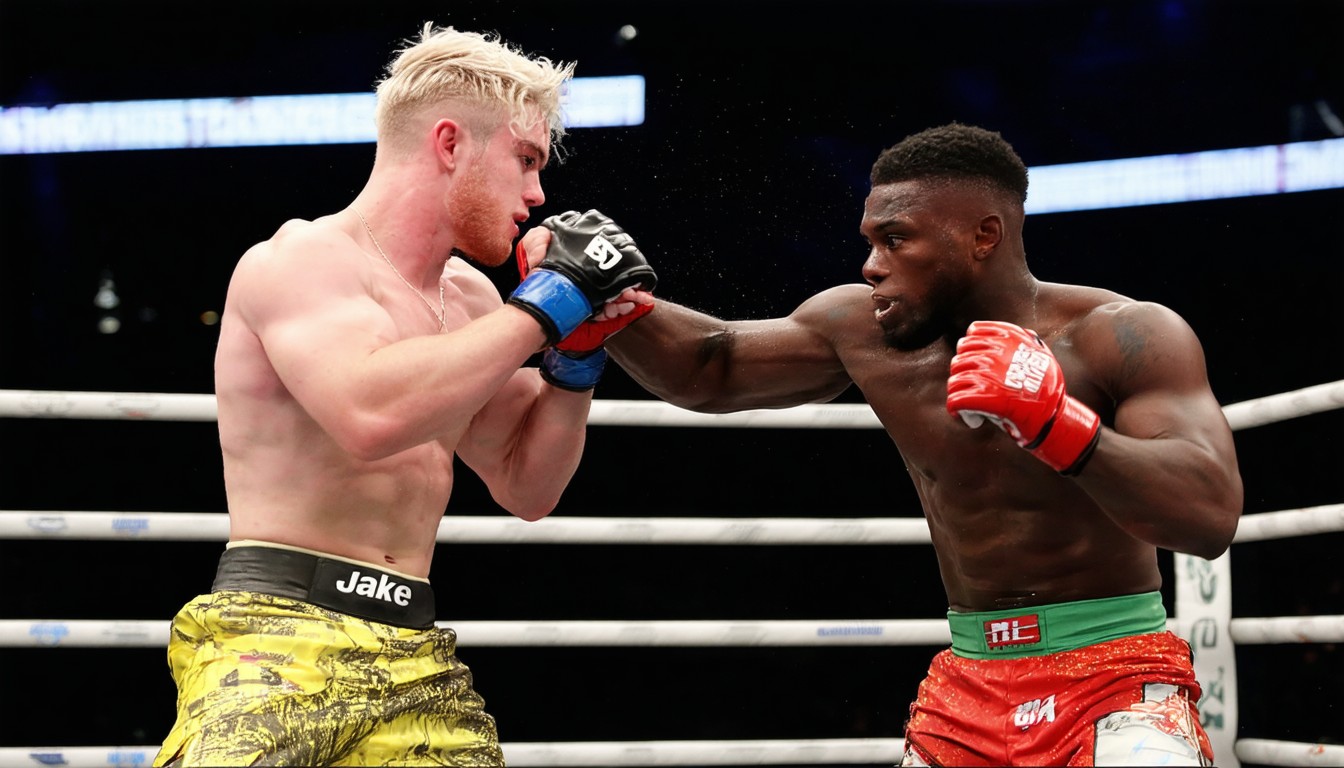
Much of today’s boxing spectacle is driven by crossover appeal—none more emblematic than a potential Jake Paul vs Gervonta ‘Tank’ Davis matchup. On paper, it’s more than just another celebrity-driven contest; it’s a collision between two fighters from vastly different backgrounds, each representing their own era of boxing evolution.
Jake Paul, YouTuber-turned-pro boxer, has upended traditional boxing marketing, leveraging his social influence to draw millions to the sport. Meanwhile, Gervonta Davis, an undefeated world champion, is lauded as one of the most explosive and skilled lightweight fighters of his generation. The mere prospect of these two sharing a ring triggers debates about legitimacy, skill, and the future of prizefighting.
At its core, analyzing a bout between Paul and Davis requires looking past social media bravado to dissect their respective boxing pedigrees, technical toolkits, and the realistic dynamics should such a spectacle ever come to fruition.
Backgrounds and Resumes: Jake Paul vs Gervonta “Tank” Davis
Jake Paul: Rapid Rise and Unconventional Path
Jake Paul has had a polarizing journey. Debuting professionally in 2020, Paul scored high-profile victories over non-boxers and aging MMA fighters such as Ben Askren, Tyron Woodley, and Anderson Silva. His bouts are often criticized for lacking competitive parity, yet Paul’s athleticism and improving fundamentals have given him credibility, especially as he continues to face stiffer opposition.
Paul’s biggest strength lies in his marketing acumen. He has managed to make every fight an event—driving pay-per-view numbers and attracting younger fans in droves. Statistics from various reports show that Paul’s fights routinely generate pay-per-view buys in the hundreds of thousands, figures that rival traditional big-name bouts.
Gervonta Davis: Undefeated Record and Pound-for-Pound Credentials
Gervonta “Tank” Davis stands as one of boxing’s most feared knockout artists. Fighting predominantly between the lightweight and super featherweight divisions, Davis boasts an unblemished record, finishing the majority of his high-level opponents inside the distance. Notable victories include stoppages over Leo Santa Cruz, Mario Barrios, and Rolando Romero.
In contrast to Paul, Davis has achieved his fame strictly through performance in the ring. According to Compubox data, Davis’s punch accuracy and power connect rate place him among the elite in his weight class. His ability to carry power up through divisions has made each of his appearances a must-see event for hardcore boxing fans.
Stylistic Breakdown: Power, Technique, and Physicality
Physical Differences and Theoretical Matchup
The size disparity between Jake Paul and Gervonta Davis is glaring. Paul generally competes at cruiserweight (around 190 pounds), whereas Davis is comfortable at lightweight (135 pounds). Should they ever meet, it would necessitate one or both fighters moving into unfamiliar weight territory.
From a technical standpoint, Davis holds pronounced advantages in speed, footwork, and ring IQ. His compact southpaw stance, excellent head movement, and ability to counterpunch present problems for nearly any opponent, regardless of their size.
Conversely, Paul’s advantages are rooted in athletic size, reach, and raw power. He fights out of an orthodox stance, relying on a strong jab and measured pacing. However, against a sharp mover and seasoned puncher like Davis, those strengths may be neutralized.
As boxing trainer Stephen “Breadman” Edwards succinctly put it:
“Size matters, but experience and technique decide fights at the highest level. Tank Davis has developed skills and fight IQ that can overwhelm bigger, less experienced fighters—even if they bring power.”
Key Scenarios and Decision Factors
- Range and Distance: Paul will seek to establish his jab, using reach to keep Davis at bay.
- Speed and Timing: Davis’s hand speed and explosive counterpunching could exploit gaps in Paul’s defense.
- Stamina and Adaptability: Davis regularly fights at a blistering pace. Paul’s ability to endure over multiple rounds against a relentless, elite technician remains largely untested.
Market Dynamics: Hype, Pay-Per-View Clout, and Boxing Trends
Beyond the ropes, a Paul vs Davis fight reflects larger trends in boxing. Influencer matchups now command mainstream attention, generating revenue streams that traditional title bouts sometimes cannot match.
When Jake Paul fought Tommy Fury, for example, social media discussions and streaming numbers surged. For Davis, fights against names like Ryan Garcia have delivered big business—demonstrating that young stars with crossover appeal are vital to boxing’s commercial model.
Promoters and networks are increasingly open to unconventional match-making. While purists frown at spectacle over substance, the Paul vs Davis narrative—blending entertainment with genuine risk—offers a template for boxing’s future business strategies.
Expert Predictions: Who Has the Edge?
Most analysts and seasoned fighters agree that, at equal weights, Gervonta Davis’s technical mastery and finishing ability would make him the heavy favorite. Yet, the unpredictability of boxing, especially with such disparate backgrounds, means there are no forgone conclusions.
If the fight materializes at a catchweight—say, midway between Davis’s division and Paul’s established weight—it introduces variables around power retention, speed, and endurance for both men.
In pure boxing terms, Davis’s championship experience, one-punch knockout power, and adaptation against world-class competition set him apart. However, Paul has demonstrated resilience and the capacity to improve with every bout, making him an intriguing, if inexperienced, challenge for anyone.
Conclusion: The Legacy and Meaning Behind the Hype
A hypothetical Jake Paul vs Tank Davis showdown transcends boxing rivalry; it is a case study in how the sport is evolving. While the outcome would hinge on strictly defined conditions (most notably weight), the intrigue lies in bridging digital celebrity and traditional excellence.
The fight would not only capture headlines but also illuminate deeper questions about legitimacy, entertainment value, and the intersection of new audiences with boxing’s storied history. Whether or not the bout comes to fruition, discussions around it underscore why, for better or worse, boxing remains uniquely positioned at the crossroads of sport and spectacle.
FAQs
Is Jake Paul vs Tank Davis officially scheduled?
No, as of now, there is no official confirmation or date for a fight between Jake Paul and Gervonta Davis. Discussions and speculation have fueled public interest, but no bout has been formally announced.
How do their fighting styles compare?
Gervonta Davis is known for lightning-fast hand speed, defensive agility, and knockout power within the lightweight divisions. Jake Paul leverages physical size, reach, and developing technical skills, focusing on measured aggression and heavy shots.
What divisions do Jake Paul and Tank Davis compete in?
Jake Paul typically fights at cruiserweight (around 190 lbs), while Gervonta Davis is a natural lightweight (135 lbs) but can compete slightly above or below that range. This weight gap would be a significant factor in any potential clash.
Who would be favored to win the fight?
Most boxing experts would favor Gervonta Davis based on skill, experience, and elite level competition—despite the size difference. However, Paul’s larger frame could present unique challenges if a match occurs at a heavier weight.
What impact would this fight have on boxing?
A Paul vs Davis fight would likely draw unprecedented attention from both traditional fans and new audiences, sparking debate about the direction of the sport. It would also set a precedent for future crossover matchups between mainstream celebrities and established champions.