How Many Reindeer Does Santa Have? Names and Fun Facts, From the 1823 Poem to Rudolph
How many reindeer does Santa have? Eight in the 1823 poem, nine with Rudolph. Every name, how Donner began as Dunder, and real reindeer facts, all sourced.
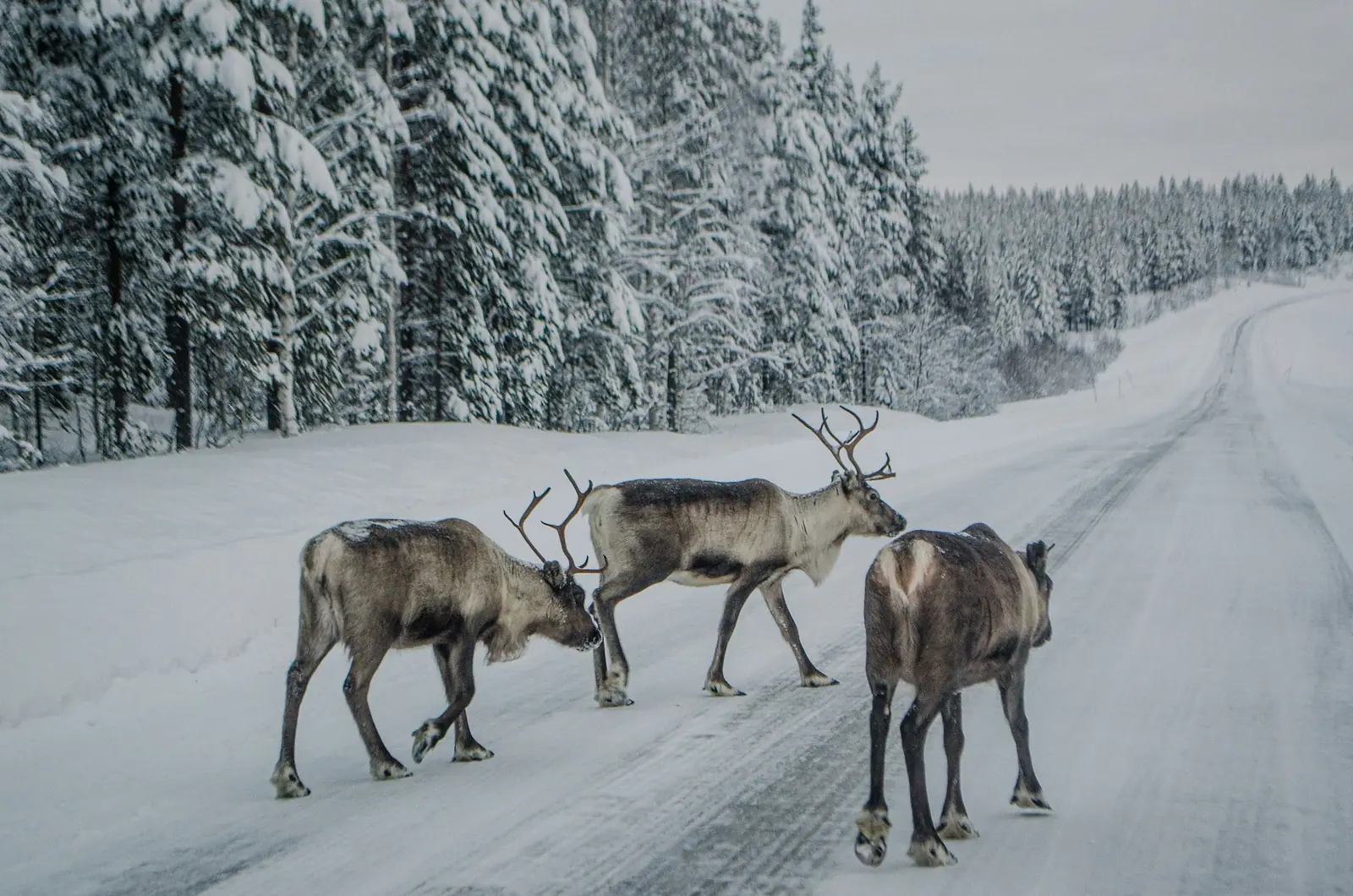
Photo: Kotryna Juskaite on Unsplash
Quick answer: Santa has nine reindeer in most modern tellings. The 1823 poem “A Visit from St. Nicholas” names eight: Dasher, Dancer, Prancer, Vixen, Comet, Cupid, Donner and Blitzen (first printed as “Dunder and Blixem”). Rudolph joined in 1939, in a Christmas booklet Robert L. May wrote for the Montgomery Ward stores.
Most answers stop at that list of nine. This one goes back to the printed sources, because the names have changed more than most people realise, and the real animals behind the legend are stranger than the story.
We checked the reindeer lines in the 1823 newspaper text and in scans of the 1837 and 1844 printings on 6 November 2026. Every link below goes to the source itself, so you can read the old pages for yourself.
How many reindeer does Santa have in the original poem?
Eight. The poem first appeared, with no author’s name, in the Troy Sentinel, a newspaper in Troy, New York, on 23 December 1823. It ran under the title “Account of a Visit from St. Nicholas” and describes “a miniature sleigh, and eight tiny rein-deer”. St. Nicholas then calls them by name. In the 1823 text, the lines read:
“Now! Dasher, now! Dancer, now! Prancer, and Vixen,
“On! Comet, on! Cupid, on! Dunder and Blixem;
The poem is better known today by its first line, “‘Twas the night before Christmas”. Clement Clarke Moore included it in his own collection, Poems, in 1844, and it’s credited to him. A case has also been made for the poet Henry Livingston Jr., and that argument hasn’t been settled either way.
What does the 1823 poem say about the reindeer?
Very little beyond their names, and what it does say is easy to miss. The reindeer are “tiny” and pull “a miniature sleigh”. They’re fast: “More rapid than eagles his coursers they came”. Up on the roof, the narrator hears “The prancing and pawing of each little hoof.”
St. Nicholas himself is “chubby and plump, a right jolly old elf”, so the whole scene is drawn small, closer to a fairy tale than to the full-size team in most modern pictures. The poem gives the reindeer no colours, no glowing noses and no personalities. Those details all came from later writers.
What are the names of Santa’s reindeer, in order?
The order below is the order in which St. Nicholas calls them in the poem. The poem doesn’t say which reindeer stands where in the team, so there’s no “correct” running order beyond this.
| # | Name in 1823 | Usual name today | Where the name comes from |
|---|---|---|---|
| 1 | Dasher | Dasher | someone who dashes, or moves fast |
| 2 | Dancer | Dancer | a dancer |
| 3 | Prancer | Prancer | a high-stepping horse or animal |
| 4 | Vixen | Vixen | the word for a female fox |
| 5 | Comet | Comet | the comet in the night sky |
| 6 | Cupid | Cupid | the Roman god of love |
| 7 | Dunder | Donner (or Donder) | thunder: donder in Dutch, Donner in German |
| 8 | Blixem | Blitzen | lightning: bliksem in Dutch, Blitz in German |
| 9 | (not in the poem) | Rudolph | added in 1939 |
So the full modern list of nine is Dasher, Dancer, Prancer, Vixen, Comet, Cupid, Donner, Blitzen and Rudolph. In Rudolph’s story he goes at the front, because his glowing nose lets him guide the sleigh through fog.
To remember them, say them in pairs: Dasher and Dancer, Prancer and Vixen, Comet and Cupid, Donner and Blitzen. Then add Rudolph on his own at the front.
Why did Dunder and Blixem become Donner and Blitzen?
The last two names changed spelling three times in print. Here’s each step, with the source you can open:
| Year | Where it appeared | The last two names | Read it |
|---|---|---|---|
| 1823 | Troy Sentinel, 23 December | Dunder and Blixem | Wikisource text, made from a page scan |
| 1837 | The New-York Book of Poetry | Donder and Blixen | Internet Archive scan |
| 1844 | Clement C. Moore, Poems | Donder and Blitzen | Internet Archive scan |
| 1949 | Johnny Marks’s song “Rudolph, the Red-Nosed Reindeer” | Donner and Blitzen | Catholic University of America Libraries |
“Dunder” and “Blixem” look like the Dutch words for thunder and lightning. By 1844 the poem’s own book had settled on “Donder and Blitzen”: a Dutch-style thunder and a German-style lightning. According to the Catholic University of America Libraries, Johnny Marks used the German spelling “Donner” when he wrote the song’s lyrics in 1949.
Which should you use? If you’re quoting the poem, Moore’s 1844 book prints “Donder”. If you’re singing the song or writing a card, “Donner” is what readers expect. Neither is wrong, but don’t mix the two in one list.
When did Rudolph become the ninth reindeer?
Rudolph arrived 116 years after the poem. In 1939, Robert L. May, an advertising copywriter at the Montgomery Ward department stores in Chicago, wrote “Rudolph the Red-Nosed Reindeer” as a Christmas booklet for the stores to hand out. According to the US Census Bureau’s history of Rudolph, Montgomery Ward distributed 2.4 million copies in the 1939 holiday season, and more than 5 million had been published by 1945.
The same Census Bureau article notes that May’s papers list other names he considered: Rollo, Reginald, Romeo and Rodney. Those papers are held at Dartmouth, May’s college, where the library’s record also notes that Montgomery Ward handed the copyright to May in 1947.
The song came next. Johnny Marks, May’s brother-in-law, turned the story into “Rudolph, the Red-Nosed Reindeer”. Columbia released Gene Autry’s recording on 1 September 1949, and it sold 1.75 million copies by the end of that season, according to the Catholic University of America Libraries. In 1964 the Rankin/Bass stop-motion TV special, narrated by Burl Ives, fixed Rudolph’s story for the next generation.
Does Santa have more than nine reindeer?
Not in the poem or the song, but other writers have given him different teams. The earliest known printed mention of Santa’s reindeer comes from an 1821 New York booklet, The Children’s Friend. The Hearthstone Historic House Museum quotes its opening: “Old Santeclaus with much delight / His reindeer drives this frosty night”. The verse gives no names and no number.
In 1902, L. Frank Baum, the author of The Wonderful Wizard of Oz, gave Santa ten reindeer in The Life and Adventures of Santa Claus. None of them match the poem. They’re Glossie and Flossie, Racer and Pacer, Reckless and Speckless, Fearless and Peerless, and Ready and Steady.
So eight is the poem’s answer, nine is the modern answer, and ten is Baum’s. If someone asks at a quiz, nine is the answer they’re looking for.
Are Santa’s reindeer male or female?
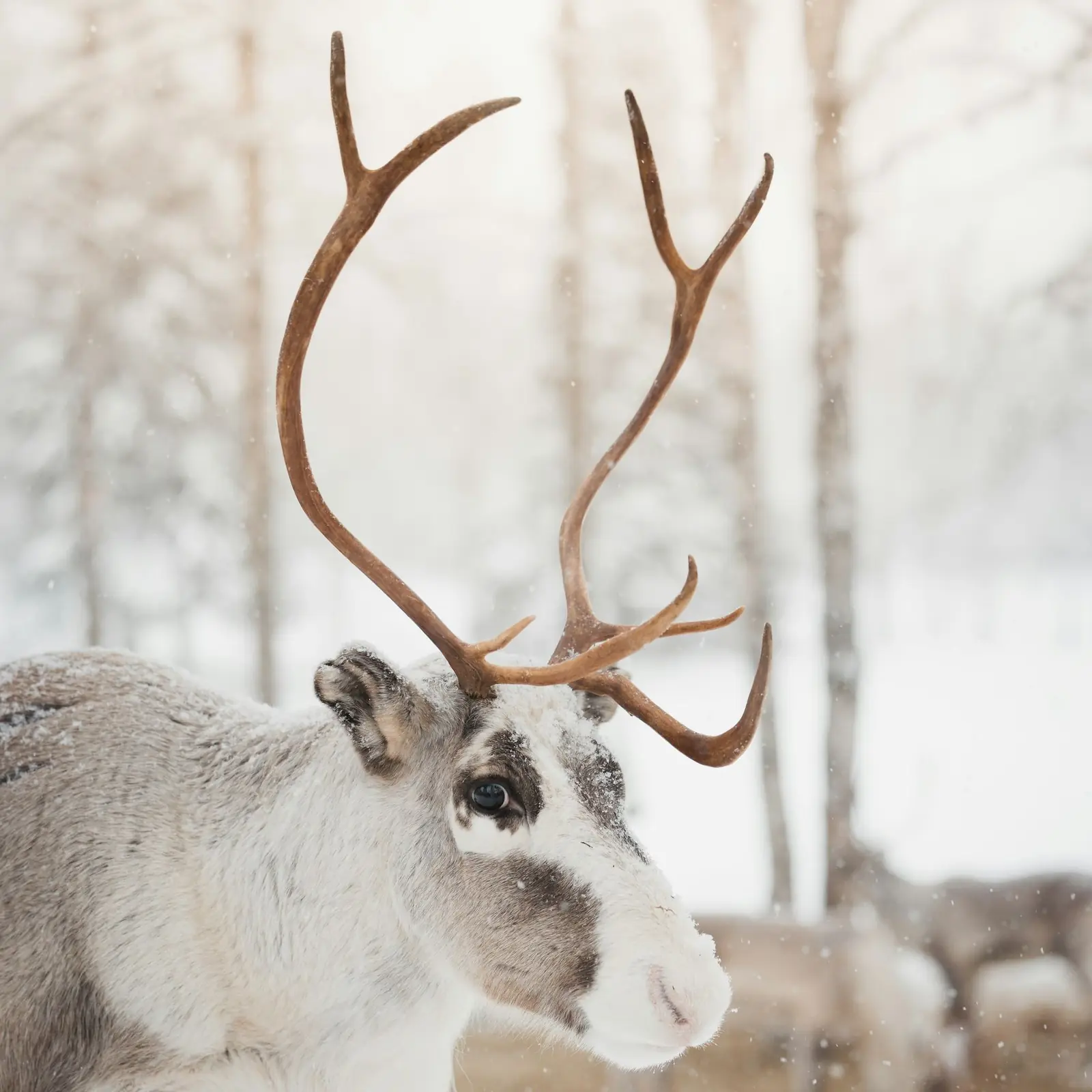
The poem never says, but the biology gives a clue. According to the Alaska Department of Fish and Game, caribou are the only members of the deer family in which both sexes grow antlers, and caribou and reindeer are the same species. The largest bulls shed their antlers in late October. Small bulls and cows that aren’t pregnant keep theirs until April, and pregnant females usually keep them until their calves are born in late May or early June.
A reindeer still wearing full antlers on Christmas Eve is therefore more likely to be female or a young male than a big adult bull. That doesn’t prove anything about a team in a poem, and the department’s timings describe caribou in Alaska, so treat them as a guide for reindeer elsewhere rather than a rule.
Fun facts about real reindeer
- Reindeer and caribou are one species. The Alaska Department of Fish and Game counts 7 subspecies. In Europe they’re all called reindeer; in Alaska and Canada, only the semi-domesticated animals are.
- Both sexes grow antlers. No other member of the deer family does this, according to the same department.
- Their eyes change colour with the seasons. A 2013 study by Stokkan and colleagues found that the reflective layer at the back of an Arctic reindeer’s eye is golden in summer and deep blue in winter. The blue version goes with more sensitive eyesight in the dark months, at the cost of some sharpness.
- Their noses really are full of blood vessels. A light-hearted 2012 study in the BMJ compared the noses of two reindeer with those of five human volunteers. The reindeer’s nasal lining had a vascular density 25% higher than the humans’. The authors suggest the rich blood supply helps stop the nose freezing and helps control brain temperature.
- Rudolph almost had another name. Rollo, Reginald, Romeo and Rodney were all on May’s list.
A Santa’s reindeer quiz for a Christmas date night
Eight quick questions for a cosy night in, a family quiz or a Christmas party. The answers are all in this guide, so read it after you’ve played.
- How many reindeer are named in “A Visit from St. Nicholas”?
- What were the last two reindeer called when the poem was first printed?
- In what year did Rudolph first appear?
- Which store gave away the first Rudolph booklets?
- Which name did May consider before Rudolph: Rollo, Rocky or Ralph?
- How many reindeer did L. Frank Baum give Santa?
- Which reindeer shares its name with a female fox?
- Which colour do a reindeer’s eyes reflect in winter?
Answers: 1. Eight. 2. Dunder and Blixem. 3. 1939. 4. Montgomery Ward. 5. Rollo. 6. Ten. 7. Vixen. 8. Deep blue.
If you want more for the evening, pair it with our fun questions to ask, and if Christmas lists are next, see what to ask for for Christmas. There’s more seasonal reading under lifestyle.
Frequently asked questions
How many reindeer does Santa have including Rudolph?
Nine. The 1823 poem “A Visit from St. Nicholas” names eight: Dasher, Dancer, Prancer, Vixen, Comet, Cupid, Donner and Blitzen. Rudolph was added in 1939, when Robert L. May wrote him for a Montgomery Ward Christmas booklet. He’s usually pictured at the front, guiding the sleigh with his glowing red nose.
Is it Donner or Donder?
Both are correct, from different sources. The 1823 newspaper printed “Dunder”, an 1837 anthology changed it to “Donder”, and Moore’s 1844 book kept “Donder”. Johnny Marks used the German “Donner” in his 1949 song, and that’s the spelling in the song. Pick one and use it consistently.
Who wrote “A Visit from St. Nicholas”?
The poem was printed without an author’s name in the Troy Sentinel on 23 December 1823. Clement Clarke Moore included it in his collection Poems in 1844, and it’s credited to him. Supporters of the poet Henry Livingston Jr. have argued that he wrote it instead, and the question hasn’t been settled.
Is Rudolph in the original poem?
No. The 1823 poem names only eight reindeer. Rudolph was created 116 years later, in 1939, by Robert L. May, an advertising copywriter at Montgomery Ward. The store distributed 2.4 million copies of his booklet that first season, and Gene Autry’s 1949 recording of the song sold 1.75 million copies in its first season.
Why does Santa use reindeer?
Nobody recorded why. The earliest known printed link between Santa and reindeer is an 1821 New York booklet, The Children’s Friend, in which “Old Santeclaus” drives his reindeer through a frosty night. Two years later, the 1823 poem gave him eight named reindeer, and that’s the team most lists still use.